 Laundromat builder
| Model | Qty | Size W×D×H mm |
|---|
Dimensions are from Fagor’s current spec sheets; door swings used in the aisle check are approximate. Final drawings follow a site measure.
Your layout, drawn from your shop’s size and your machine mix, ready to take to your landlord, shopfitter, electrician and plumber. Add your name and email and it downloads straight away.
Real Fagor footprints, the gaps between them and the corridor behind them, placed on your walls. Anything that doesn’t fit is flagged.
A clear walkway behind every machine — 1 m as standard, down to 0.75 m in small shops — so water, drains, gas and dosing can be reached without moving a machine.
Dryer capacity checked against washer capacity, enough dryer pockets for the washers, and a big washer paired with a big dryer for doonas.
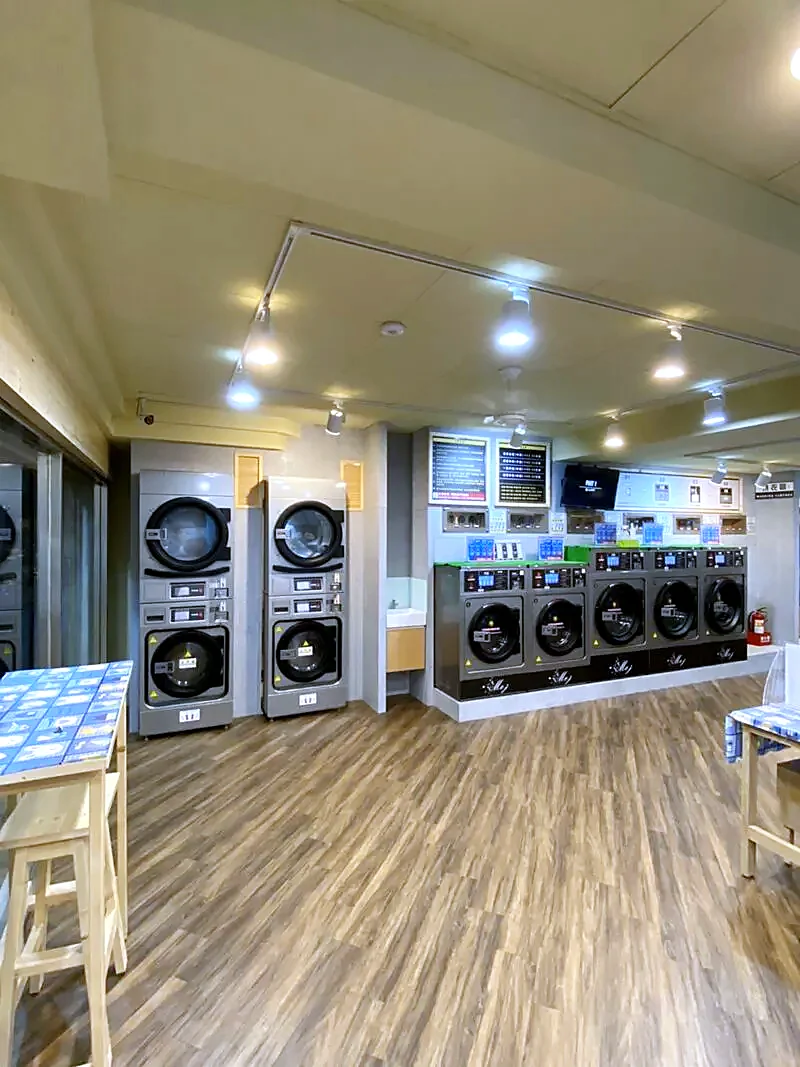
Plan, 3D view and front-on machine walls with plinths and bulkheads, so you can see the store before anything is ordered.
Test the numbers for your machine mix. A planning guide, not financial advice.
Starting figures are typical for an Australian self-serve shop. Machine numbers come from your builder layout. Move the sliders to match your site.
Machines, fit-out, approvals and working capital.
A stacked dryer has two pockets.
What customers pay, including GST.
2 to 3 is a quiet shop, 3.5 to 4 is steady, 5 or more is busy.
Rent, power, gas, water, chemicals, cleaning, payment fees, repairs and insurance. Typically 35–45%.
Takings exclude GST. Profit is before tax, finance, depreciation and your own wage, and is open 364 days a year. A planning guide, not financial advice: takings vary with location, competition and pricing. We’re happy to talk through realistic numbers for your site.
At 5 washes a day a machine runs less than 3 hours of a 16-hour day. Going from 5 to 6 washes a day is 20% more takings — and most of it is profit, because roughly 70% of a laundromat’s costs are fixed. Only water, power and gas rise with each wash.
Rent reviews, utility tariffs, insurance and repairs creep up every year. Tick the stress test: a 9% rise in costs with 2% less takings can halve the profit in the years you’re paying off a loan. Plan to keep improving the store.
Cutting prices wins few new customers and costs you on every existing one. Raise prices when you add new machines or visible upgrades, keep pace with inflation, and know what nearby stores charge.
Weekly spend × 52. A customer spending $15 a week is worth about $780 a year — so a quick, friendly refund for a few dollars is always worth it.
More capacity (bigger washers, stacked dryers, card payment), cheap extras (Wi-Fi, charging, detergent included in the wash price), a cleaner, brighter store, better customer service, and local marketing.
Measure takings by machine and by month, not from bank deposits. It shows which machines customers prefer and how many washes each does. Expect busier winters and wet weeks.