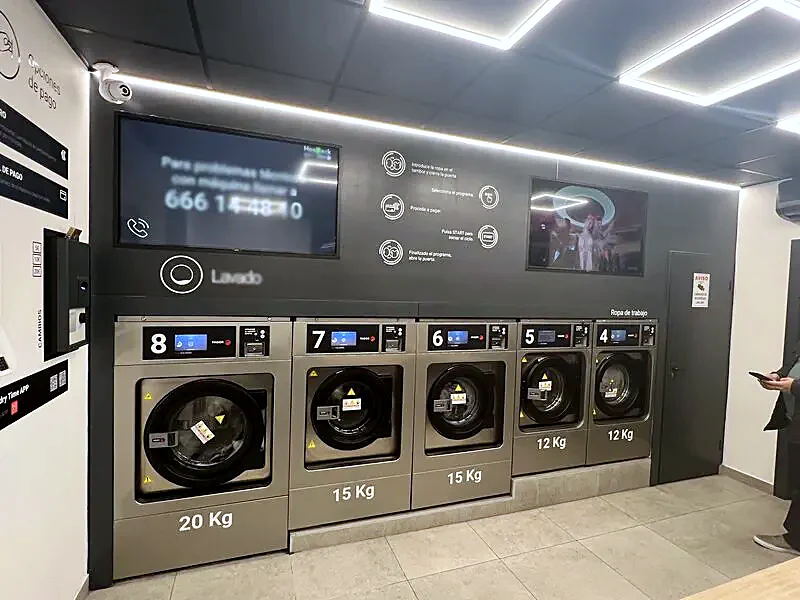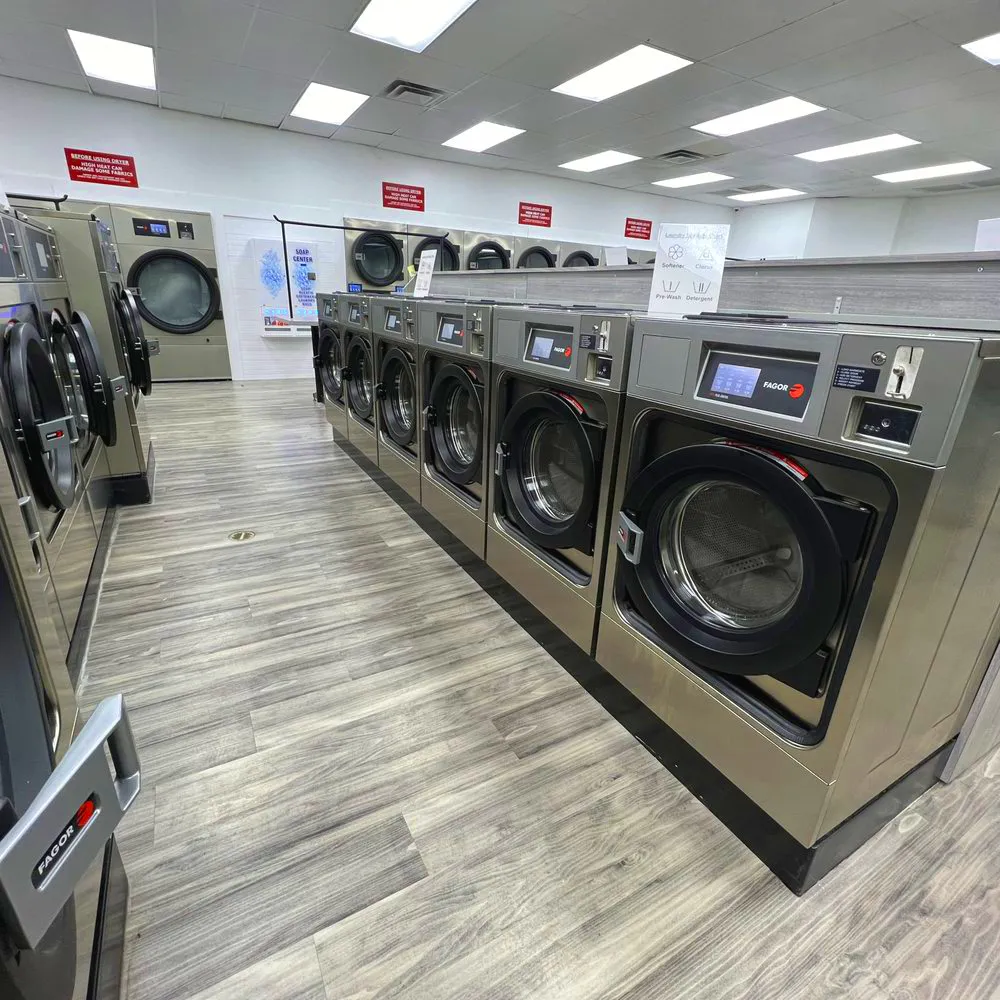

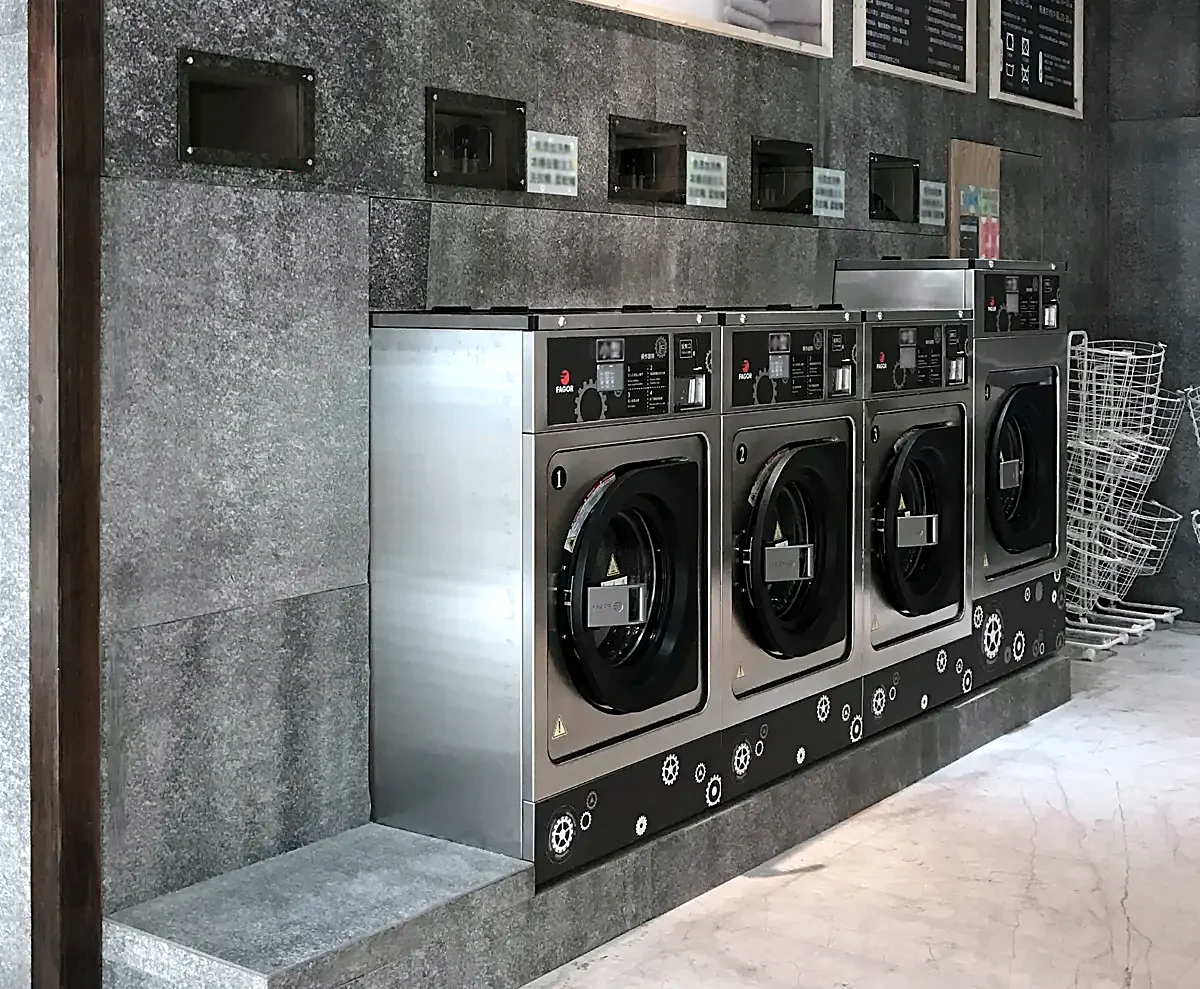
Fagor's LN laundromat washers are hard-mount machines. They spin hard (a G-factor of 200), and they are built to be bolted to a solid plinth or floor. That choice affects the fit-out, so it is worth understanding before you plan the shop.
What hard mount means
A soft-mount washer sits on springs and dampers that soak up its own vibration, so it can stand on almost any floor. A hard-mount washer passes its forces into whatever it is bolted to. In return it is a simpler, heavier machine built for long days of continuous use.
Why the spin matters to your dryers
The harder a washer spins, the more water it takes out of the load. Less water left in the washing means less work for the dryers, so loads dry sooner and the dryers can keep up with the washers on a busy day. In a laundromat, where dryers are often the bottleneck, that matters.
The plinth
Most laundromat washers sit on a plinth: a steel or concrete base the machines are bolted to.
- Strength. The plinth and its fixings carry the washer's spin forces into the slab. It has to be built for it, and the slab has to be sound.
- Height. Raising the washers puts the door at a comfortable loading height, and lets you line up the tops of different-sized machines.
- Access. Pipes, drains and cables run behind the machines, so the plinth layout has to leave room to service them.
The laundromat builder draws your washers on their plinths, with the service space behind them, and lets you line up the fronts or the tops.
What to check on the site
- The floor: a concrete slab in good condition. Suspended timber floors and upper floors need an engineer's advice.
- Drainage: hard-mount washers empty fast, so the drains must keep up when several dump at once.
- Water and power at each machine position, planned before the plinth is built.
We build and install it
We supply the washers, build the plinths, install and commission everything, and service it after you open. See the washers page for sizes, or call 1300 70 69 70.