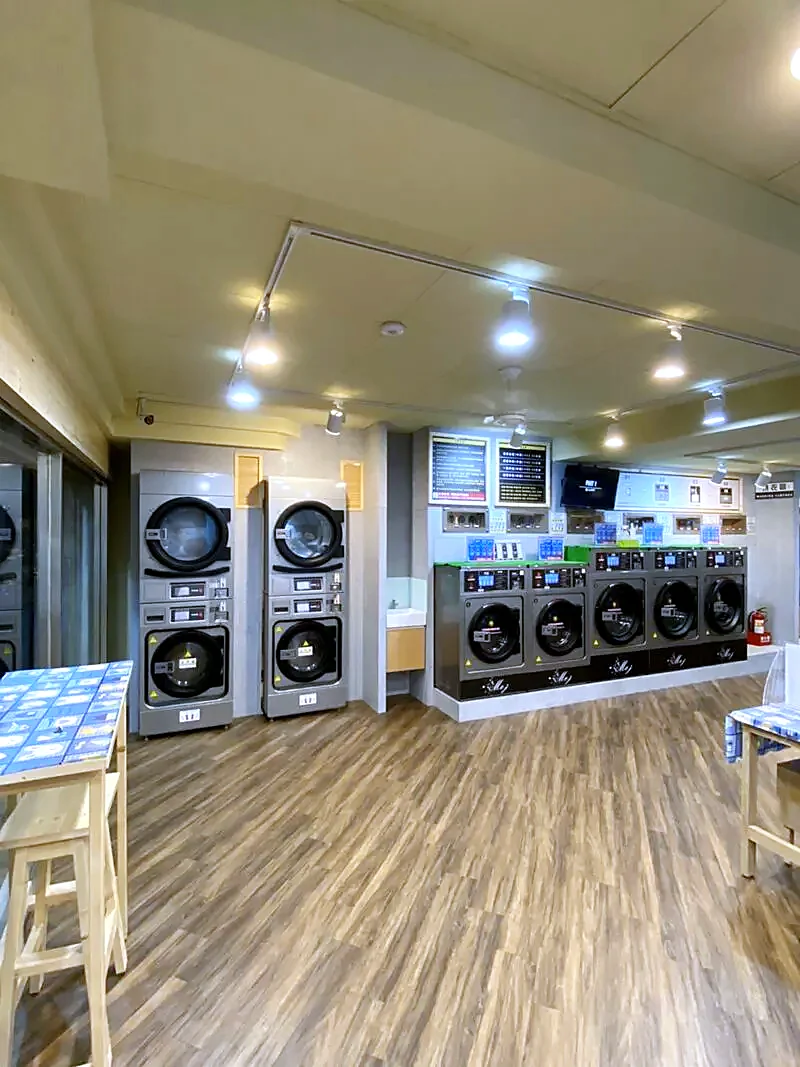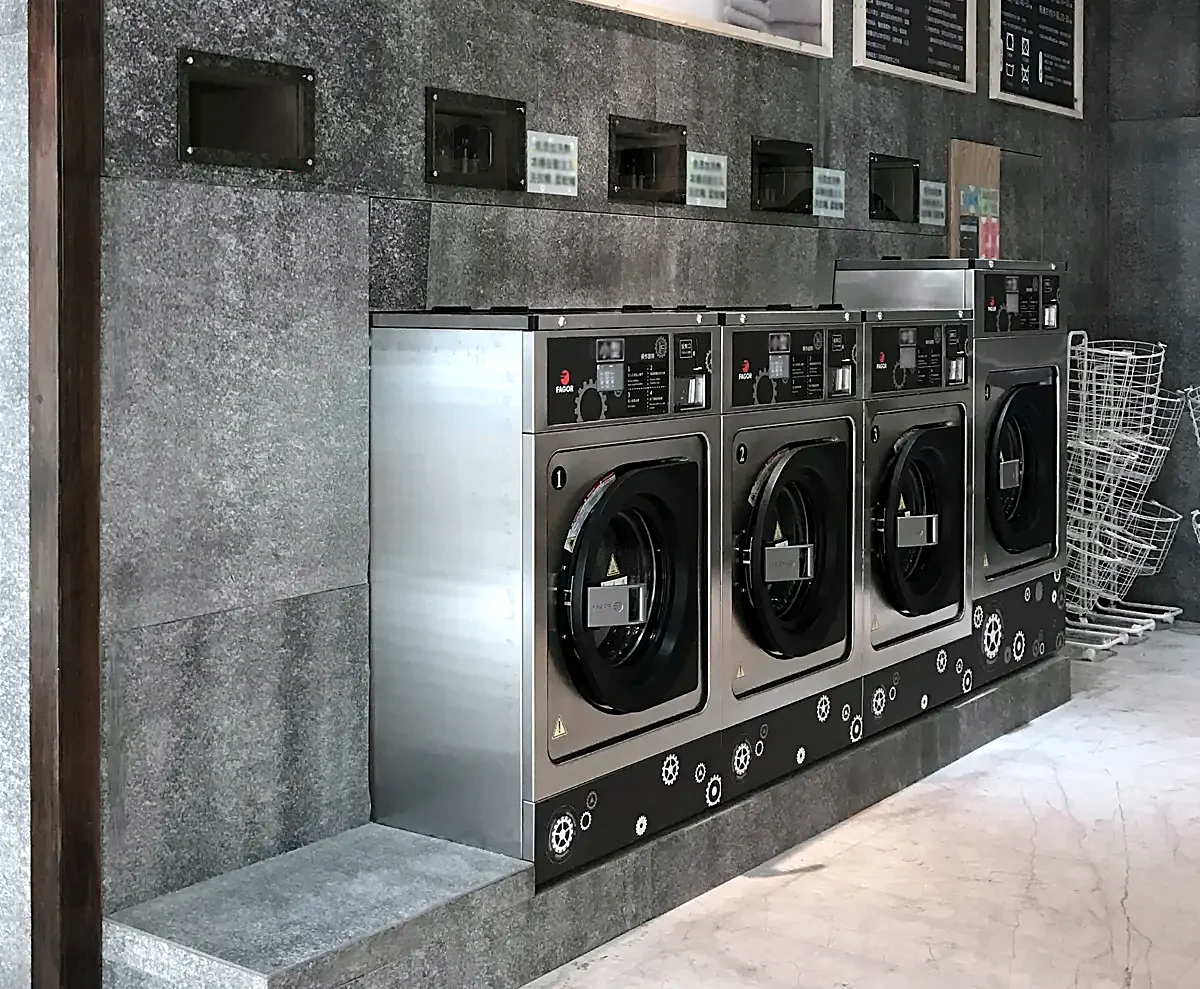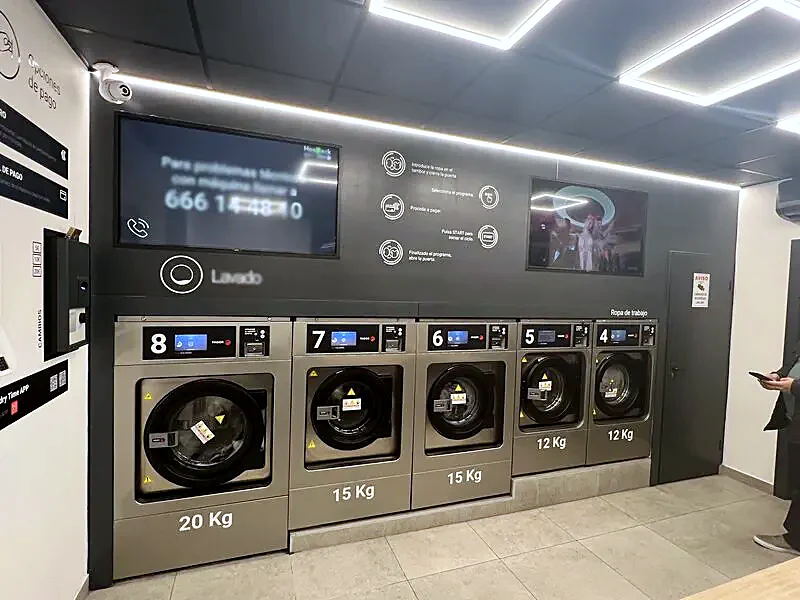

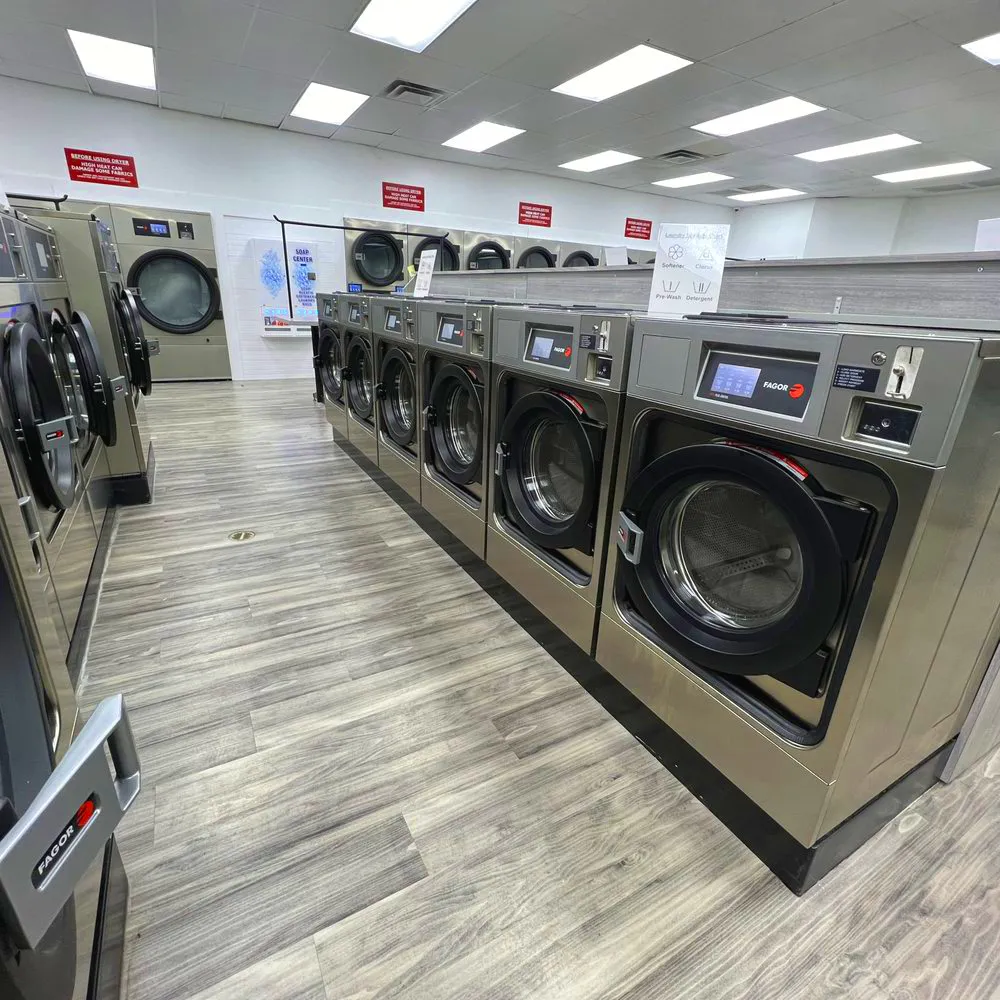
How many washers, what sizes, how many dryers, and where they all go. The machine mix decides what your laundromat can take in on a busy day, and getting it right is one of the most useful things to do before you order anything.
Start with your customers
The right mix depends on who walks through the door. Students and renters tend to bring everyday loads: clothes, towels, sheets. Families bring more of everything. And almost everyone, sooner or later, brings the things that won't fit in a washer at home: doonas, blankets, pillows, pet bedding and sports kit.
So before counting machines, think about what your area will bring you, and when. Weekends and the first sunny day after a wet week are usually the busiest.
A range of washer sizes
Most shops are better with a spread of drum sizes than a row of identical machines.
- Standard washers handle everyday loads and keep the price low for customers with a small wash.
- Large washers take the doonas, bedding and sports kit that won't fit at home. They earn more per load, and they're often the reason a customer drives past a closer laundromat to get to yours.
The laundromat builder lets you try different mixes in your own shop size, and the ROI calculator shows how they change the numbers.
Enough drying for your washers
A customer who has finished washing and can't get a dryer leaves unhappy. Drying usually takes longer than washing, so plan the dryers to keep up with the washers on your busiest day, not your average one.
- Stacked dryers put two dryers in the floor space of one, which matters when every metre of rent counts.
- Gas or electric depends on the building. Gas dryers need a gas supply big enough for all of them running at once. Electric dryers need the power to match. Either way, every dryer needs a way for its exhaust to get outside. See gas or electric dryers.
Where everything goes
A good mix can still work badly if the layout fights it.
- Washers near the dryers, so wet washing travels a short way.
- Room to load and unload. Customers need space in front of the machines for baskets and trolleys, and the doors need room to swing.
- Access behind the machines. Water, drainage and dryer ducting run behind them, and a technician needs to get in to service them without pulling the shop apart.
- Folding space and seating close by, so people have somewhere to be while they wait.
- The pay point where customers see it as they walk in, with clear signs.
Plan for later
Leave room to grow. If the shop does well, the easiest upgrade is another washer or another stack of dryers, but only if the power, gas, water, drainage and space were planned for it at the start. It costs far less to allow for it in the first fit-out than to add it afterwards.
Let us draw it
We draw the layout, cost the machines and trades, supply and install everything, and service it after you open. Build your layout and send it to us, and we'll show you what mix fits and how it would work on a busy day.